Best Garden Dump Carts and Wagons for Yard Work
The best garden dump carts and wagons tip and tow without wearing you out: a poly dump cart for compost and mulch, a steel mesh cart for rocks and branches, and a no-flat wheel option for rough ground. Pick by how you unload, how far you haul and how much weight you move.
On this page (9 sections)
- What should garden dump carts and wagons handle first?
- Which type of garden cart fits your yard?
- How do load limits and bed size work together?
- Which wheels and handles make hauling easier?
- When should you tow instead of push?
- What frame and bed material lasts in the weather?
- Which cart fits a small garden and which fits a large yard?
- How do you set up and care for a garden dump cart?
- Which garden dump cart or wagon should you buy?
The best garden dump carts and wagons tip and tow without wearing you out. For most yards, start with a poly dump cart in the 900 to 1,200 lb range because it holds mulch and compost and dumps them without shoveling.
A steel mesh cart suits rocks and branches better, while a no-flat wheel option helps on gravel and rough ground.
Choosing between garden dump carts and wagons comes down to three habits: how you unload, how far you haul and what you load. That order matters more than the number of wheels or the size of the tub.
The products and buying rules below match each habit to a cart type.
Our picks at a glance
Our score weighs specs, features and buyer feedback against what you're shopping for. The guide below walks through the choices in order, then ends with a firm rule for each need.
What should garden dump carts and wagons handle first?
Start with the unloading job, not the hauling distance. A cart that carries a full load but makes you shovel it out costs more effort than its wheels save.
Mulch, compost and soil tip out cleanly from a smooth poly bed. Rocks, branches and debris dump faster from a flat steel tray with low sides.
Bagged goods and plants want a wagon with a fenced bed that keeps things contained.
Distance is the second question. A long run from the shed to the far garden rewards a tow handle that hitches to a lawn tractor.
A small yard only needs a walk-behind cart with a good grip.
Load weight closes the shortlist. Wet topsoil, gravel and firewood are heavier than dry leaves.
A cart's rated capacity assumes you spread the weight and keep the bed balanced.
Write down your three common trips and the heaviest one. That short list rules out more carts than any spec comparison.
A cart that clears your worst trip comfortably will handle every easy one that follows, so weight the hardest job most heavily when you decide.
Rule: choose the cart that empties your heaviest, most frequent load without a shovel, then size the load limit to match.
Which type of garden cart fits your yard?
There are three practical shapes in the garden dump carts and wagons group. Each one changes how you load and how you empty.
Tipping poly dump carts
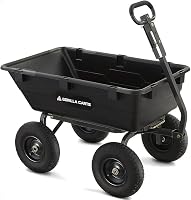
A poly bed tips forward or releases to slide the load out. The smooth plastic resists sticking and rinses clean after compost.
The models here hold roughly 4 to 7 cu ft and carry 900 to 1,200 lb.
The VEVOR 7 Cu Ft 1200 lb Poly Dump Cart uses a front-handle dumping frame so the bed tilts without lifting. Its mesh cover keeps small items from bouncing out on the trip.
A 1.2 in thick metal frame backs the 1,200 lb rating, and the 180-degree adjustable handle doubles as a tow bar. A built-in cushion comes with the cart, which helps on long walks behind a mower.
Pick this type when compost, mulch and garden waste are your regular loads.
Steel mesh and flatbed carts
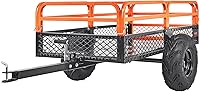
A mesh cart holds rocks and branches in a basket bed, then drops to a flat tray for bulky goods. The VEVOR 900 lb Steel Mesh Garden Cart converts from a fenced cart to a flatbed and has a 3.45 cu ft load bed.
Its removable mesh sides lift away so the flat tray can take crates, tools or long branches that would not fit under a fence. It suits jobs where the load is awkward rather than soft.
Steel needs more care than plastic in wet weather, though the powder coat resists corrosion. Pick this type when your loads are irregular in shape and you load by hand.
No-flat and rough-ground carts
A no-flat wheel skips air checks and resists punctures on gravel and thorny ground. The CAMMOO 900 lb No-Flat Poly Dump Cart runs 10-inch no-flat tires with dual steel bearings and tips its bed up to 90 degrees.
Its 270-degree rotating handle swings wider than the usual 180 degrees, so you can steer from either side of a narrow path. The bed surface has structural ridges for strength, and CAMMOO notes that items may not sit perfectly flat on them.
Pick this type when your paths are gravel, sand or patchy lawn. If you also want a folding frame for storage, browse our foldable garden carts and wagons roundup.
Rule: pick poly for soft loads, steel mesh for awkward loads and no-flat wheels for rough ground.
How do load limits and bed size work together?
Load limit and bed size pull against each other. A big bed filled with wet soil can pass the weight limit long before it looks full.
Wet soil weighs about 1.2 to 1.4 tons per cubic yard. A 900 lb limit equals roughly 10 to 12 cu ft of wet soil.
That makes the 900 lb carts best for lighter bulk like dry leaves, mulch or tools. The CAMMOO bed is a clear example: it measures 27.95 in long by 17.32 in wide by 8.27 in deep, and CAMMOO rates it to hold over 4 cu ft.
Fill that shallow bed with damp topsoil and you are close to the 900 lb ceiling quickly.
The 1,200 lb VEVOR poly cart pairs its limit with a 6.48 cu ft bed. The extra volume suits bigger bulk jobs, but the weight still governs the safe load.
Fill a wide bed evenly so the frame stays balanced.
Check the cart's own weight as well. The steel mesh cart weighs 39.7 lb and the poly cart about 58.4 lb.
A heavier empty cart is harder to push up a slope.
Keep loads below the limit on soft or sloped ground. A margin protects both the frame and your back.
When you know the density of what you haul, you can judge a full bed by weight rather than by sight, which is the habit that keeps frames and handles intact.
Rule: size the bed to your material type and the load limit to your heaviest fill, and keep a margin on slopes.
Which wheels and handles make hauling easier?
Wheels and handle design decide how much effort a load costs after the bed is full. Four wheels spread the weight better than two, and a wide handle gives more control.
Ten-inch tires roll over grass and gravel; 13-inch tires on the VEVOR poly cart absorb bumps on uneven ground. No-flat wheels skip air checks but feel firmer on soft soil.
Pneumatic wheels grip better but need pressure checks. The CAMMOO's no-flat tires carry dual steel bearings, which CAMMOO says makes rolling smoother and the wheels more durable, and its deep tread is built to grip grass, gravel, mud, sand, turf, snow and cement.
A 180-degree rotating handle lets you steer from either side. The CAMMOO goes further with a 270-degree handle and a 90-degree dump tilt.
A T-shaped handle with a rubber grip reduces hand fatigue on long walks. The steel mesh cart's T-handle adjusts up to 180 degrees and uses a rubber grip for a firm hold.
Swivel wheels help turning in tight beds and around trees. Rigid wheels track straighter on long runs.
The CAMMOO's wheels are built as rigid casters, while the steel cart uses swivel casters, so the two steer differently in tight space. Match the wheel setup to your paths, not to the showroom floor.
Rule: choose 10-inch no-flat wheels for rough ground and 13-inch pneumatic wheels for soft, uneven lawn.
When should you tow instead of push?
Tow behind a machine when the distance is long or the load is heavy. A tow handle turns the cart into a trailer for a lawn tractor, ATV or UTV.
The VEVOR poly cart's two-in-one handle works as a hand pull or a tow bar. That flexibility helps on large lawns and farms where walking a full cart twice is wasted time.
VEVOR lists ATVs, UTVs, tractors and lawnmowers as tow partners, and the quick-release bottom frame lets you switch to dumping once the cart is unhitched. For dedicated towing setups, our tow behind dump cart roundup compares the hitch options.
Towing changes the safety rules. Keep the load low and balanced so the cart does not sway, and drive slowly on slopes.
A towed cart follows the machine's turns, so watch the swing at corners. The mesh cover on the poly cart helps here by holding loose items in when the cart changes direction.
Hand pushing still wins in tight beds and around delicate plants. A tow cart needs a clear route wide enough for the machine plus the cart.
The steel mesh cart has no tow bar, so it is a walk-behind tool from the start.
Rule: tow when the route is long and open, and push when the route is tight or the load needs careful placement.
What frame and bed material lasts in the weather?
Match the material to how often the cart sits outside. Steel frames need dry storage or a powder coat to resist rust; poly beds shrug off rain and rinse clean.
The steel mesh cart uses high-strength Q235 steel with three support beams on the base. The poly carts use a steel frame under a molded plastic tub.
Both handle outdoor use, but plastic beds are easier to hose down after compost. The CAMMOO tub is made from 100 percent virgin polypropylene rather than recycled plastic, which CAMMOO presents as a strength choice for a bed that takes repeated dumping.
Thicker frames and reinforced beds carry heavier loads without flexing. The CAMMOO frame adds diagonal rods on the rear supports for a stable triangle.
That bracing matters most when you dump a full load on uneven ground. Its locknuts keep every bolt secure, which is the kind of small detail that decides whether a frame stays tight after a season of bumps.
Check the handle and wheel materials too. Metal hubs outlast plastic ones on gravel.
Rubber grips stay comfortable in wet weather. Alloy steel handles on the VEVOR carts and a metal handle on the CAMMOO give a firmer push than plastic.
Rule: store steel carts under cover and choose a poly bed if the cart lives outside.
Which cart fits a small garden and which fits a large yard?
A small garden needs one cart that loads easily and parks in a corner. A large yard needs capacity and a tow option to cut walking trips.
For beds under a few hundred square feet, a 900 lb cart with a 3 to 4 cu ft bed covers most jobs. The steel mesh cart's flatbed mode also helps with bagged soil and potted plants.
Its 22.05 in by 72.44 in by 21.06 in footprint is long and narrow, so measure your shed door before you count on storing it there.
For a large yard or multiple beds, the 1,200 lb poly cart moves more per trip. Its tow handle saves walking when the garden sits far from the shed.
At 79.5 in long and 31.7 in wide overall, it needs a wider storage bay than the mesh cart. For hauling plants and bagged goods without dumping, see our garden wagon roundup.
Think about storage space as well. A wide cart with a 72 in handle needs a clear wall.
A compact poly cart tucks into a shed more easily. Measure both the parked footprint and the turning room in the aisle, because a cart that barely fits the door is a daily nuisance.
Rule: pick a compact 900 lb cart for small beds and a 1,200 lb tow-capable cart for large yards.
How do you set up and care for a garden dump cart?
Assembly takes basic tools and about an hour, and the first trip should be a light load. Check every bolt and the wheel fittings before you fill the bed.
Follow the maker's assembly steps and tighten the frame bolts in the order given. The CAMMOO uses locknuts to keep bolts secure, which helps on bumpy ground.
Fit the handle at a height that lets you push with straight arms. On the VEVOR carts the handle rotates up to 180 degrees, so set the angle before you load rather than fighting it under weight.
After each heavy load, check the tire pressure on pneumatic wheels and clear debris from the axles. The CAMMOO's tub and the VEVOR poly tub rinse clean, so a quick hose-down after compost keeps odors down.
Wipe steel mesh and touch up chips in the powder coat. The tubeless tires on the steel mesh cart need no inner tube to patch, but they still want a pressure check now and then.
Grease or oil the wheel bearings now and then if the maker calls for it. Store the cart tipped or under cover to keep water out of the bed.
A steel cart left full of wet leaves over winter is the fastest way to find rust in spring.
Rule: assemble on flat ground, start with a light load and check bolts and tires after every heavy trip.
Which garden dump cart or wagon should you buy?
Pick the VEVOR 900 lb Steel Mesh Garden Cart for most yards because its 900 lb limit and fenced-to-flatbed conversion handle rocks, branches, bagged soil and tools. It is the most flexible frame in this group for mixed garden jobs.
Choose the VEVOR 7 Cu Ft 1200 lb Poly Dump Cart when you move big bulk loads and want to tow. Its 1,200 lb limit and 6.48 cu ft bed suit mulch, compost and long runs behind a lawn tractor.
Choose the CAMMOO 900 lb No-Flat Poly Dump Cart when rough ground and flat tires are your main worry. Its 10-inch no-flat tires and 90-degree dump keep maintenance low.
If your loads are mostly soft, a dedicated poly dump cart tips and cleans more easily. For hauling without tipping, a garden wagon keeps plants and bags contained.
Whichever garden dump carts and wagons you shortlist, match the bed to your material and the wheels to your paths, and the cart will earn its space in the shed.
Frequently asked questions
What is the difference between a garden dump cart and a garden wagon?
A dump cart tilts or releases its bed to empty a load, so it suits soil, mulch and compost. A garden wagon holds a load and moves it across the yard without tipping.
Many carts here convert between fenced and flatbed modes, so you get wagon hauling and easier unloading in one frame.
How much weight should a garden dump cart carry?
Match the load limit to the heaviest material you move. Wet soil and gravel are dense, so a 900 lb cart fills quickly; 1,200 lb models handle bigger bulk loads.
Leave a margin for wet weather and uneven ground rather than loading to the limit.
Do I need no-flat tires on a garden cart?
No-flat tires make sense on gravel, rough lawn and thorny ground where air tires lose pressure. Pneumatic tires absorb bumps and grip soft soil well but need air checks.
If you want to skip maintenance, a 10-inch no-flat set with steel bearings is a practical choice.
Can a garden dump cart attach to a lawn tractor?
Some dump carts include a two-in-one handle that lets you tow behind a lawnmower, ATV or UTV. Check that the model's hitch and handle fit your machine before you buy.
A hand-pull cart without a towing handle is for walking loads only.
How do you unload a garden dump cart without lifting?
Use the tipping or quick-release bed. A front-handle frame lets the bed tilt up to 90 degrees so contents slide out under their own weight.
On poly dump carts the release mechanism opens the bottom or front so you never shovel the load out by hand.