How to Move Heavy Rocks Without Machinery
To move heavy rocks without machinery, clear a firm route, use a pry bar and stable rollers for a rock you can control, or use a cart for smaller stones. Stop if the rock could roll, tip, or trap you.
On this page (9 sections)
- How do you move heavy rocks by hand?
- What should you check before choosing how to move a rock?
- When can a cart help move heavy rocks?
- Should you use rollers, a wheelbarrow, or a garden cart?
- How do you move a rock with a pry bar and rollers?
- How do you choose a cart for moving heavy rocks?
- What mistakes should you avoid when moving rocks?
- When should you stop and get help?
- How to move heavy rocks: which method should you choose?
To move heavy rocks without machinery, match the method to the rock and route. Use leverage and sturdy rollers for a rock that can move steadily on firm, level ground; use a cart or wheelbarrow for smaller stones you can load and control.
Before starting, check the stone's shape, the path, and where it will stop. If it could crush or trap you, or you cannot control it at every step, leave it in place and get experienced help.
How do you move heavy rocks by hand?
Move one rock at a time with short, controlled shifts. Clear people, pets, loose tools, and trip hazards from the route, and keep everyone away from the rock's path.
For a stone you can shift slightly, place a long pry bar under one edge and lift only enough to slide in a sturdy roller. Keep your hands and feet out of pinch points, and never reach beneath a raised rock.
Push from the side in small increments, resetting the rollers as needed. Stop if the rock begins to roll or shift unexpectedly, and don't try to catch it.
Avoid loose branches, crumbling bricks, or other unstable objects as rollers. If you need someone to steady the rock by putting a hand or foot near it, change the plan.
What should you check before choosing how to move a rock?
Check the rock, route, and stopping point before choosing a tool. A short, firm, nearly level path is easier to manage than loose soil, a slope, steps, or a tight turn.
- Shape: Rounded rocks can roll; flat stones can slide or tip.
- Ground: Soft, wet, or uneven ground can make rollers or wheels sink or veer.
- Clearance: Check gates, corners, and the destination before moving.
- People: Keep everyone away from the downhill side and travel path.
- Stopping point: Decide where you will set the stone down before you start.
Don't guess how a rock will move if its shape or resting point makes it unstable. Use a different method or ask someone experienced to assess the job.
When can a cart help move heavy rocks?
A cart helps with smaller rocks that fit securely and stay stable on the route. Load a few stones at a time, keep them low and centered, and leave room to steer and stop.
A four-wheel cart carries its load in a bed, while a wheelbarrow requires you to balance the handles. The plain guide to wheelbarrows and yard carts explains how their layouts suit different hauling jobs.
The BILT HARD cart has a quick-release dump feature and a convertible handle for hand pulling or towing. Choose it when you want a contained load and need to unload loose material by tipping the bed; skip it if the route is too steep or rough to steer a loaded cart safely.
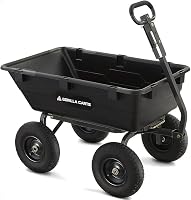
The Gorilla Carts utility cart has a handle that can convert for towing behind a lawn tractor or ATV. It suits users who want a steel bed and may tow loads on suitable ground; skip towing if the route, hitch setup, or load makes the cart hard to control.
A capacity figure is a limit, not a recommended target for every route. See our guide to heavy-duty garden carts for more cart options, and compare wheelbarrows and wagons if you are deciding between a bed and a handled tray.
Should you use rollers, a wheelbarrow, or a garden cart?
Use rollers for a stable rock on firm, level ground, and use a cart or wheelbarrow for smaller stones. Choose a wheelbarrow only when you can lift its handles, balance the load, and keep the single wheel on a clear path.
The True Temper 6 cu ft steel wheelbarrow has a single wheel and a flat-free tire, so it suits someone who wants a traditional tray for smaller stone loads. Its single-wheel layout requires active balancing, so skip it if the load is too heavy to steer or the route makes balance difficult.
Keep stones below the rim. Place the heavier pieces near the wheel and add smaller pieces only when they stay in place; remove stones if the handles feel too heavy or the load shifts.
For several small rocks, a four-wheel cart can be easier to keep level than a wheelbarrow. Our guide to everyday yard carts can help you choose a cart for routine hauling.
How do you move a rock with a pry bar and rollers?
Lift just one edge at a time, and use rollers only when the rock sits securely on them. Work on firm ground, with a solid support point for the pry bar that won't crack or slide.
- Clear the route and decide where the rock will stop.
- Set the pry bar under an edge you can lift slightly.
- Raise the edge only enough to place a sturdy roller.
- Lower the rock onto the roller and check that it is stable.
- Push slowly from the side, then stop before resetting the roller.
Keep the bar's end from slipping toward your body. Never use a hand or foot to reposition a roller while the rock rests on it.
If the rock tips or a roller shoots out, step away and reassess. Don't stand in the direction it could travel.
Can you roll a large rock on pipes?
Sturdy rollers can help move a rock across firm, level ground if they stay aligned and support the load. Avoid thin, cracked, or slippery pipes that could buckle or shoot out.
Keep a long pry bar nearby for small lifts while repositioning a roller. Never reach under the stone, and don't stand in its path.
How do you choose a cart for moving heavy rocks?
Choose a cart by bed size, unloading method, handle, and route. The largest capacity is useful only if the cart can fit through the route and you can load, steer, and stop it safely.
The Sekey cart has a 12 cu ft steel bed and removable sides, which can help with rocks or other awkward loads that need a wider opening. Its product title states a 1,600 lb capacity, while its specifications give a 1,400 lb maximum, so confirm the applicable limit before loading.
Choose the Sekey when the large bed and removable sides suit your load and you can manage its pneumatic tires on the route. Skip it for hand pulling if you cannot control a loaded cart, especially on a grade.
Before loading any cart, check that the wheels can pass over the route and that you can keep the rocks from rolling. Don't treat the stated maximum as a safe load for soft ground, slopes, or sharp turns.
What mistakes should you avoid when moving rocks?
The main mistakes are choosing an unstable route, overloading a cart, and trying to catch a moving rock. A slower move is easier to stop and reassess.
- Don't work beneath a raised rock or put your fingers under its edge.
- Don't push from directly in front of or downhill from a stone.
- Don't use a cart whose wheels sink, veer, or cannot turn on the route.
- Don't pile rocks high or leave round stones free to roll.
- Don't improvise a ramp without securing both it and the cart.
- Don't move a large stone up or down stairs, over a wall, or along a steep slope by hand.
Set up the destination before moving the rock so you don't have to change direction at the last moment. If a move calls for a vehicle, strap, or winch, use equipment and a setup designed for the load.
When should you stop and get help?
Stop when the rock could roll downhill, the ground is unstable, or the load is beyond your control. A stone that could crush a hand, foot, or leg needs a different plan and proper help.
Don't continue because the rock has already moved partway. Leave it in a stable position if you can do so safely, keep bystanders away, and reassess the route and method.
How to move heavy rocks: which method should you choose?
Choose rollers for one stable rock on firm, level ground, and a cart for smaller stones you can secure. Use a wheelbarrow only when you can balance and steer its load; get experienced help when the stone or route exceeds your control.
For yard hauling, compare wheelbarrows and wagons and use our guide to wheelbarrow and yard cart types to choose the right style for the rest of the job.
Frequently asked questions
How do you move a large rock by hand?
Clear a short route, use a long pry bar to lift one edge slightly, and place a sturdy roller under it. Push from the side in small steps, keeping your hands and feet away from the rock.
Stop if it shifts or rolls freely, or if you can't control its movement.
What can I use to move rocks without a dolly?
A pry bar and sturdy rollers can help move a rock across a firm, level surface. For smaller stones, use a wheelbarrow or garden cart if the combined load stays within its capacity.
Skip wheeled equipment on a steep or uneven route where the load could shift or tip.
How do you move rocks uphill by hand?
Avoid pushing a heavy rock uphill if gravity could pull it back toward you. Break the job into smaller moves on stable ground, and get experienced help or suitable equipment for a large stone.
Keep everyone clear of the rock's downhill path.
Can a garden cart carry heavy rocks?
A garden cart can carry rocks when the combined load stays within its capacity and the stones are secured against shifting. Check the route, wheel clearance, and ground firmness first.
A capacity figure does not make overloading, tipping, or using a cart on a steep slope safe.