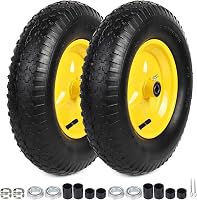
How to Foam Fill a Wheelbarrow Tire
To foam fill a wheelbarrow tire, use tire foam made for its size and type, and follow the product’s application and curing directions. Choose a solid replacement when its tire, axle, and hub measurements match your wheelbarrow.
On this page (8 sections)
- How do you foam fill a wheelbarrow tire?
- What should you check before filling the tire?
- Is foam filling or a solid tire the simpler flat-free choice?
- Which flat-free replacement wheels suit different setups?
- How do you measure a wheelbarrow wheel for a replacement?
- What mistakes should you avoid with a flat-free wheel?
- How should you care for a foam-filled or solid wheel?
- How do you decide how to foam fill a wheelbarrow tire or replace it?
To foam fill a wheelbarrow tire, use tire foam made for its size and type, then follow the application and curing directions. If you want a flat-free wheel without filling the old tire, choose a solid replacement that matches your wheelbarrow’s tire size, axle, and hub.
Foam filling can keep a compatible pneumatic tire in service, but it takes preparation and leaves less room to correct a mistake after application. A solid replacement skips that process and air checks, though a close-looking wheel can still have the wrong axle or hub fit.
How do you foam fill a wheelbarrow tire?
Apply only foam made for your tire type and size, using the foam maker’s instructions for the amount, positioning, and cure time. The steps differ between products, so don't guess at how much to inject or how long to wait.
- Check that the tire and foam product are compatible.
- Remove the wheel if you need better access to the valve or want room to work.
- Release any remaining air only as the foam maker directs.
- Attach the container to the valve stem and apply the recommended amount.
- Position or rotate the wheel as instructed so the fill can spread.
- Let the tire cure for the stated time before putting it back into service.
Use the protective gear named in the directions and protect the work area from spills. Stop if the tire is damaged, the valve is blocked, or you cannot confirm the foam is suitable.
Don't use generic expanding foam or add extra fill to compensate for a leak. Foam that expands or sets incorrectly can leave the tire difficult to repair.
What should you check before filling the tire?
Inspect the tire, rim, and valve, then confirm that the foam product covers your tire type. A split sidewall, damaged bead, bent rim, or leaking valve may make filling a poor repair choice.
Read the size printed on the tire and identify whether it uses a tube or is tubeless. If you cannot tell, ask a tire or equipment repair shop before injecting anything.
Think about the wheelbarrow’s usual load and terrain, too. Foam filling doesn't raise the tire’s load limit, so check how much a wheelbarrow can hold when deciding whether the current setup suits your work.
Is foam filling or a solid tire the simpler flat-free choice?
A solid replacement is simpler when its measurements match your wheelbarrow. It comes ready to install and needs no inflation, while foam filling adds a compatibility check, application, and curing step.
Filling may make sense when the tire is sound and the existing wheel is hard to replace. It keeps that wheel in service, but the process can be messy and the result depends on correct application.
A solid tire avoids punctures and pressure checks. It may ride firmer than an air-filled tire, which can make bumps and vibration more noticeable on rough paths.
If the current wheel has a puncture but is otherwise in good shape, see how to fix a flat wheelbarrow tire. If the tire or wheel is worn, use how to replace a wheelbarrow wheel to plan the swap.
When does foam filling a wheelbarrow tire make sense?
Foam filling can suit you if the tire is in good condition, the fill is compatible, and you want to keep the existing wheel. It can also be useful when you cannot find a replacement with the right size and hub setup.
Skip filling when the sidewall is cracked, the rim is bent, or the tire type is uncertain. A repair shop can identify an unfamiliar setup before you make a permanent change.
Who should choose a solid replacement wheel?
Choose a solid replacement if you want to skip inflation and foam application, and you can confirm a matching tire size, axle, and hub. Don't order by diameter alone; compare the bearing bore and hub length or offset as well.
A solid wheel may not suit you if you need the softer ride of an air-filled tire on rough ground. Consider the usual route and load before replacing the wheel.
Which flat-free replacement wheels suit different setups?
Choose by tire size and axle fit first, then compare load capacity and wheel details. The three options below have different diameters and fit requirements, so measure your current wheel before deciding.
Who should consider the TICONN 14.5-inch tire?
The TICONN 14.5-inch wheel suits a larger compatible wheelbarrow or cart when the tire size, axle, and hub fit. It has polyurethane foam construction, a steel rim, and a stated capacity of up to 330 lb.
Its compatible tire sizes include 4.80/4.00-8, 4.00-8, 4.00-6, 3.50/3.00-8, and 3.25-8. The included kit has 3/4-inch ball bearings and nylon spacers in two lengths, so check the axle size and hub length before ordering.
Skip this wheel if your current setup uses a 10-inch 4.10/3.50-4 tire or its hub dimensions don't match.
Who should consider the TICONN 10-inch tires?
The TICONN two-pack suits equipment that uses 4.10/3.50-4 wheels and has a 5/8-inch axle bore fit. Each tire supports up to 440 lb, and double-sealed bearings are included.
Measure your axle first: the bore is designed for axle diameters of about 15.4 to 15.9 mm. Skip this set if your wheelbarrow uses a larger tire or a different axle size.
Who should consider the AR-PRO 10-inch tires?
The AR-PRO pair suits a matching 4.10/3.50-4 setup when you need a 2.2-inch offset hub. Each tire supports a dynamic load of up to 500 lb, and the wheels have 5/8-inch bearings.
Compare the tire size, axle, and offset with your current wheel before buying. The stated capacity is a dynamic load, and prolonged static loading is not recommended, so skip this pair if that use is part of your plan.
How do you measure a wheelbarrow wheel for a replacement?
Match the tire size, axle diameter, and hub position before buying a replacement. Two wheels with the same outside diameter can still differ in width or alignment.
Remove the old wheel and measure the axle diameter and the hub’s length or offset. Note the tire size printed on the sidewall, the bearing bore, and whether the hub is centered or offset.
Clean rust or dirt from the axle before measuring. A replacement wheel won't fix a bent axle or damaged frame.
For the removal and installation steps, follow how to replace a wheelbarrow wheel. If mud and debris have built up around the frame during the repair, how to clean a wheelbarrow covers basic cleanup.
What mistakes should you avoid with a flat-free wheel?
The most common mistakes are using incompatible fill, overfilling, and ordering a wheel by diameter alone. Each can leave you with a damaged tire or a wheel that won't fit.
- Don't inject foam until you confirm it suits the tire type and size.
- Don't guess at the amount, wheel position, or cure time.
- Don't fill a tire with a cracked sidewall or damaged rim.
- Don't assume every 10-inch wheel has the same axle and hub fit.
- Don't exceed the wheel’s stated capacity or the wheelbarrow’s load limit.
- Don't assume a solid tire will roll as softly as an air-filled tire.
Keep loads low and centered, especially when moving over uneven ground. Stable loading and a sound axle matter as much as choosing a flat-free tire.
How should you care for a foam-filled or solid wheel?
Check the wheel, axle, and fasteners regularly, even when the tire needs no air. Look for sidewall damage, a loose wheel, rust, or signs that the hub does not turn freely.
Clear mud and debris after yard work, and store the wheelbarrow where the wheel and frame stay dry. For more cleanup guidance, use how to clean a wheelbarrow.
How do you decide how to foam fill a wheelbarrow tire or replace it?
For how to foam fill a wheelbarrow tire, choose compatible tire foam only if the tire and rim are sound and you can follow the full application and curing directions. Choose a solid replacement if you want to skip filling and find a wheel with matching tire, axle, and hub dimensions.
Pick the TICONN 14.5-inch wheel for a compatible larger setup; pick either 10-inch pair only when your equipment uses 4.10/3.50-4 wheels and the axle and hub measurements match. If you can't confirm the fit, have a repair shop identify the wheel before you buy.
Frequently asked questions
Can you foam fill a wheelbarrow tire at home?
Yes, if the tire is in suitable condition and the foam is made for that tire type and size. Remove the wheel if that gives you safer, clearer access, protect the work area, and follow the foam maker’s directions for application and curing.
If compatibility is unclear, ask a repair shop before filling.
Does foam filling a tire make it solid?
Foam filling replaces the air space inside a pneumatic tire with foam, so the tire no longer relies on air pressure. It is different from a wheel manufactured with a solid tire.
Follow the foam maker’s instructions for how to position the wheel and how long to let the fill cure.
Is a solid wheelbarrow tire better than foam filling?
A solid replacement is the simpler option when you find one that matches the tire size, axle, and hub. Foam filling may suit a sound tire you want to keep, but it requires compatible fill, careful application, and curing.
Consider the surfaces you cross and the fit before choosing.
How do I know which replacement wheel fits?
Compare the tire size, axle diameter, bearing bore, and hub length or offset with your current wheel. Measure the axle and hub directly, then compare those measurements with the replacement.
A similar outside diameter alone does not confirm that the wheel will fit your wheelbarrow.