Steel vs Poly Wheelbarrow: Which Tub Holds Up Better? (November 2026)
Steel suits abrasive, heavy yard work, while poly suits lighter handling and rust-free cleanup. Choose by the materials you haul, how you store the barrow and whether dents or cracks would be harder to manage.
On this page (6 sections)
Steel suits abrasive, heavy yard work, while poly suits lighter handling and rust-free cleanup. In a steel vs poly wheelbarrow comparison, the right tub depends on what you haul and how much wear, moisture and impact it will face.
Steel is a practical fit for gravel, stone and other rough loads. Poly is lighter to handle and doesn't rust, but a sharp impact or overload can crack it.
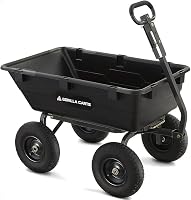
The three options here show the tradeoff clearly: a 6 cu ft steel tray, a 3.7 cu ft plastic bucket on a steel frame, and a 6 cu ft plastic tray. For more on tub styles and frame layouts, see our guide to types of wheelbarrows and yard carts.
 Best for heavy loose loads
True Temper 6 Cu Ft Steel Wheelbarrow, Never Flat Tire

Steel vs poly wheelbarrow: which tub lasts longer?
Steel handles abrasive materials well, while poly avoids rust but can crack from a hard hit. Neither material lasts forever if it is overloaded, dragged against sharp edges or left dirty and wet.
A steel tray can dent when struck, but a dent may leave the tub usable. Scratches that expose metal can rust, so clean off wet soil and let the tray dry after work.
Poly has no metal surface to rust. Its main risk is damage from a concentrated impact, such as dropping a large rock into the tub or striking it against a hard edge.
For routine mulch, soil and garden cleanup, a plastic tub may hold up well with careful loading. For repeated hauling of stone or gravel, steel is often the more forgiving choice.
What does steel handle better?
Steel is a sensible choice when the load is abrasive or likely to scrape the tub. Gravel, stone and tools can rub against the surface during loading and dumping.
The True Temper has a smooth steel tray with a sloped, curved front for dumping and spreading. Its 6 cu ft capacity gives it room for materials such as stone, gravel, dirt, mulch and firewood.
A tough tub doesn't make every load easy to control. Keep the load within the barrow's limit, avoid uneven piles and move slowly on slopes.
What does poly handle better?
Poly handles moisture without rusting and is usually easier to lift than a comparable steel tray. It suits garden jobs where you want to rinse out soil, leaves or mulch after use.
The VEVOR has a PP plastic tray with 6 cu ft of capacity and a stated 330 lb limit. The Amazon Basics model has a plastic bucket, steel frame, 3.7 cu ft capacity and the same stated load limit.
Poly is not damage-proof. Keep sharp rocks from falling into the tub from height, and don't use a crack as a reason to keep carrying heavy loads.
Which material is easier to clean and store?
Poly is easier to rinse without worrying about rust, while steel needs drying after wet or muddy work. Storage conditions matter as much as the tub material.
Wet soil and plant debris can sit in any wheelbarrow. Empty the tub after use, rinse away residue and store it where water won't collect.
The Amazon Basics cart tips for space-saving storage. If garage space is tight, measure its stored position and compare it with the barrow's full dimensions before buying.
Steel needs a little more attention when the coating is damaged. Dry the tray and check scratches after hauling wet materials; rust can spread from exposed areas.
A dry shed or covered space reduces weather exposure for either type. Don't leave a barrow where rainwater pools in the tub or sits around fasteners.
For a cleaning routine, see our guide on how to clean a wheelbarrow and keep rust away. It covers habits that help protect both the tray and frame.
How do load size and capacity change the choice?
Choose capacity for the volume you can move safely, then check the weight limit separately. A large tub can hold bulky material, but it can also become difficult to control when filled with heavy soil or rock.
The True Temper and VEVOR each hold 6 cu ft. The Amazon Basics holds 3.7 cu ft and has a 330 lb capacity, while the VEVOR's stated limit is also 330 lb.
The True Temper's product information gives its capacity but no maximum weight limit. Don't treat 6 cu ft as a safe weight figure; stone and wet soil weigh far more than loose leaves or mulch.
If you regularly move dense loads, estimate the weight before loading and stay within the barrow's stated limit. Our guide to how much a wheelbarrow can hold explains why volume and weight are different measures.
| Product | Best for | Tub | Capacity | Tire | Our score |
|---|---|---|---|---|---|
| True Temper 6 Cu Ft Steel Wheelbarrow, Never Flat Tire | heavy loose loads | Seamless steel | 6 cu ft | Flat-free, single wheel | 8.3 |
| Amazon Basics 3.7 Cu Ft Wheelbarrow Cart | lighter garden work | Plastic | 3.7 cu ft | 7.8 | |
| VEVOR 6 Cu Ft Single-Wheel Wheelbarrow | large plastic loads | PP plastic | 6 cu ft | PU solid foam, single wheel | 7.2 |
Which wheelbarrow fits a smaller yard?
A smaller 3.7 cu ft tub can be easier to load for short garden jobs and may mean fewer oversized loads. The Amazon Basics also tips for storage, which can help when a shed has limited floor space.
A larger tub can reduce trips for leaves, mulch or light soil. It is less useful if a full load makes steering, lifting or dumping hard to manage.
Consider the route from the pile to the work area. Narrow paths, steps and soft ground can make a smaller, lighter load easier than maximizing tub capacity.
Is plastic or steel easier to push?
Tub material alone doesn't determine pushing effort; wheel layout, load balance and terrain matter too. A full barrow can feel harder to steer than an empty one, regardless of whether the tub is steel or poly.
All three choices have a single wheel. A single wheel can turn through narrow spaces, but it asks you to balance the load as you push.
The True Temper has a flat-free tire, so it doesn't need air. The Amazon Basics uses inflatable rubber wheels, while the VEVOR has a solid foam tire with deep treads.
If uneven ground is part of your yard, compare the tire and handle details along with the tub. Our guide to best wheelbarrows for landscaping and heavy yard jobs covers choices for demanding routes and loads.
A second wheel can offer a steadier base, though it may turn differently in tight paths. If balance is a concern, compare dual wheel wheelbarrows for steady loads before settling on a single-wheel design.
Which tub should you choose for your work?
Pick steel for frequent rough loads, and pick poly for easier cleanup and rust-free storage. The best match is the tub you can load, push, dump and maintain safely.
The True Temper is the steel choice here, with a 6 cu ft tray and curved front for dumping. Its flat-free tire also avoids routine air checks.
The Amazon Basics is the smaller plastic option, with 3.7 cu ft of capacity and a 330 lb limit. It fits routine cleanup when an oversized tub would be more than you need.
The VEVOR pairs a 6 cu ft plastic tray with a 330 lb limit and solid tire. It may suit bulky garden loads when you want a poly tub, but keep the weight limit in mind.
Choose a steel tub if you often haul stone, gravel or firewood and can dry it after use. Choose poly if you mostly move mulch, leaves and soil, and want easy rinsing without rust concerns.
Final decision: steel vs poly wheelbarrow
Choose steel for repeated abrasive loads; choose poly for lighter chores, wet materials and simple cleanup. For a large poly tub, the VEVOR gives 6 cu ft of volume, while the smaller Amazon Basics is easier to store and has a 330 lb limit.
If you plan to repair a damaged plastic tub, read how to repair a cracked plastic wheelbarrow tub. For jobs where a tub isn't the best shape, compare a wheelbarrow vs wagon for your yard.
Our score weighs specs, features and buyer feedback against what you're shopping for. Check the exact model's instructions and capacity before loading it.
Frequently asked questions
Is a steel or poly wheelbarrow better?
Steel suits abrasive materials and rough work where a dent is easier to accept than a crack. Poly suits routine yard chores where low weight, no rust and easy cleanup matter more.
Match the tub to your loads, then compare the capacity and weight limit of the full barrow.
Does a poly wheelbarrow crack?
A poly tub can crack after a hard impact, prolonged stress or an overload, though construction and use matter. Avoid dropping heavy rocks into it, spread loads across the tub and follow the wheelbarrow's capacity limit.
Small cracks may be repairable, but severe damage can make replacement safer.
Will a steel wheelbarrow rust?
Steel can rust when moisture reaches exposed metal, especially if the finish is scratched or chipped. Empty wet material, rinse off salts or chemicals, and let the tub dry before storage.
A cover and a dry shed can help limit exposure, but inspect the tray for damaged coating.
Can a plastic wheelbarrow carry gravel?
A plastic wheelbarrow can carry gravel when its capacity and load limit allow it. Use care loading sharp stones, since impact against the tub can cause damage.
For frequent heavy gravel work, compare a steel tray's construction and the barrow's stated limit before choosing.
How do I choose between steel and plastic for mulch?
Either tub can move mulch, so choose by load size, cleanup and storage. A larger tub cuts trips if you can control it when full; a smaller plastic cart may be easier to tip and store for occasional jobs.
Check the capacity and maximum load before piling on wet mulch.